
Wedding planning · Gurugram
Wedding Planner in South City II, Gurugram
Plan a wedding in South City II through one connected brief for venue, guests, décor, hospitality, production, suppliers and event-day execution. The planning approach is locality-aware without inventing a local branch, fixed package or one-size-fits-all venue assumption.
Sohna Road & Nirvana corridor · serviceability confirmed through the Delhi NCR coverage model
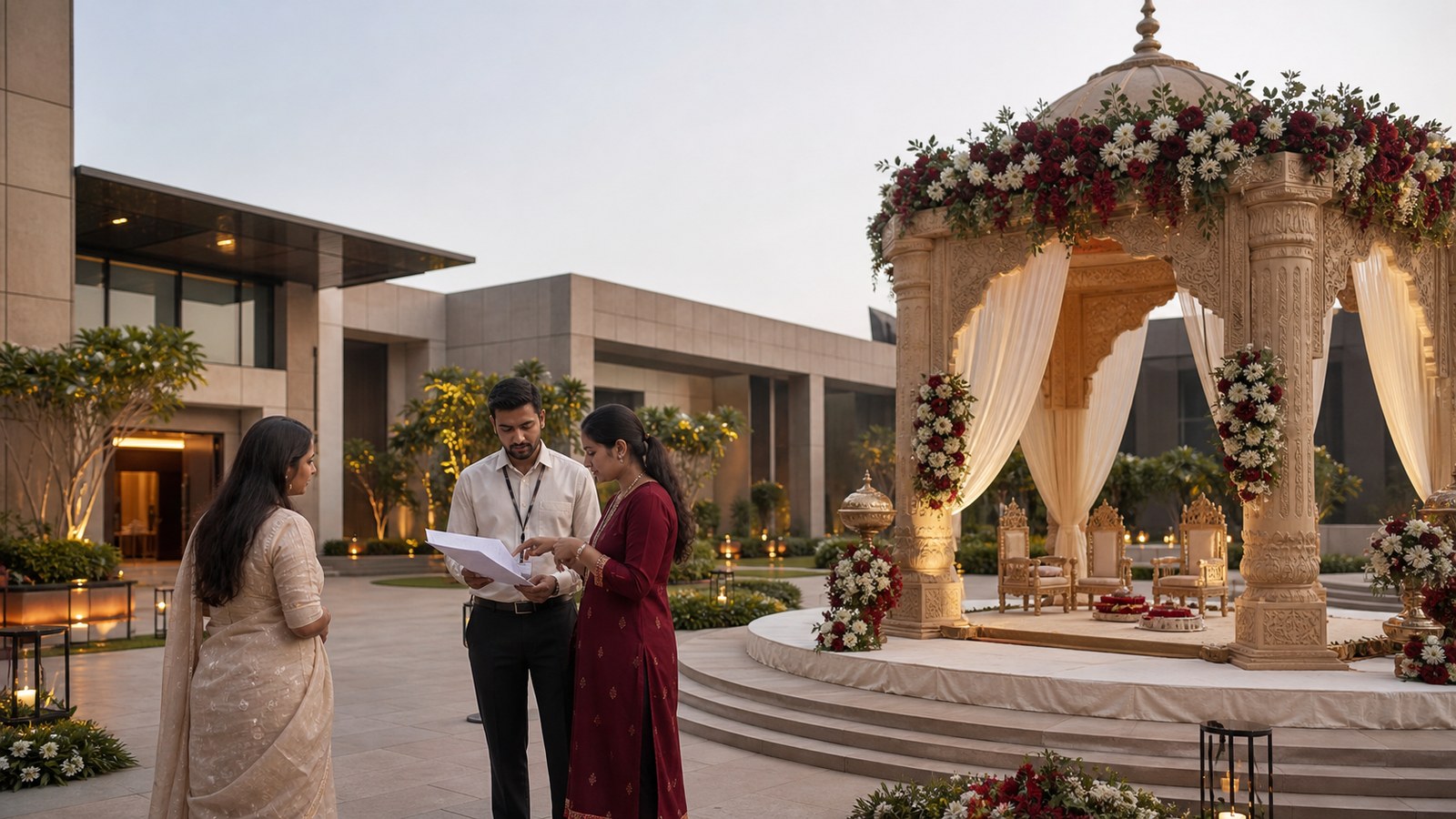
Local planning lens · Sohna Road & Nirvana corridor
Build local relevance from real logistics, not a copied city paragraph for Gurugram
Planning in South City II should become more precise—not more promotional—because the locality is known. The team can attach the area to the enquiry, compare movement with South City I and Sector 42, and ask the venue-specific questions that a city-wide page cannot answer in advance. For this planning variation, the focus is late-night departure and after-party transport. It is a checkpoint, not a claim that every South City II wedding has the same issue. The broader Nirvana/Sohna Road side context helps frame guest and supplier routing, but dimensions, permissions, parking, power, sound rules and load-in conditions must come from the actual venue or responsible authority. This is how the page remains locally useful while protecting the project from invented office, project, pricing or response-time claims.

Guest journey
Use the guest journey to expose weak transitions early
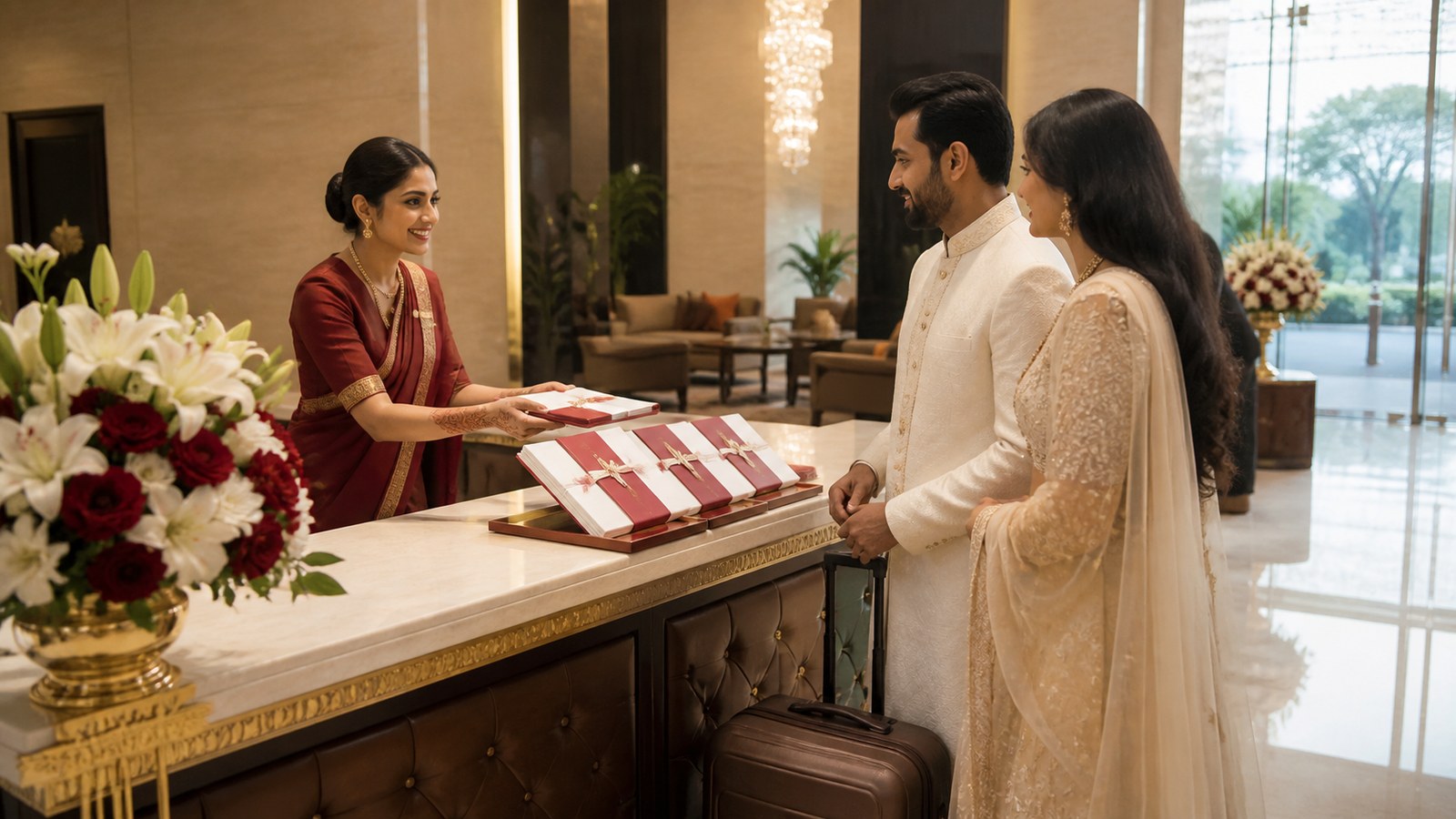
Read the South City II plan as though you are an outstation guest receiving only the official wedding communication. Can you tell where to arrive, what transport is arranged, how much buffer exists between functions and whom to contact if plans change? That exercise often exposes more than another supplier meeting. The guest journey should connect RSVP status, hotel or home base, welcome information, function-wise transport, seating or special assistance and final departure. For this page, late-night departure and after-party transport is the extra stress test. Guests moving between South City II, South City I, Sector 42 or another Delhi NCR area should not depend on optimistic travel assumptions. The same journey map also helps catering, photography and production because their timing depends on when people actually reach the venue, not only the printed invitation time.
Budget-control planning
Give every supplier the same starting version of the celebration
Before collecting proposals for a South City II celebration, build one decision sheet that all suppliers can understand. It should name every function, venue/address, target guest count, likely start/end time, ceremony requirements, hospitality expectations, design direction and any hard commercial limits. Include late-night departure and after-party transport as one of the early planning tests. Then identify dependencies: a venue decision may affect production, a guest-count revision may affect catering and transport, an artist rider may affect stage and sound, and a ceremony change may alter photography and meal timing. The planner should not hide those links inside meeting notes. They belong in the brief so late changes can be evaluated against the whole wedding. This is also the right place to record exclusions and responsibilities that remain with the venue or family.
Explore the Gurugram planning network
Use nearby pages as planning context, not as artificial location inventory
Many Delhi NCR weddings cross more than one neighbourhood because guests may stay in one area, a family function may happen in another and the main venue may sit elsewhere. From South City II, the useful adjacent planning references are South City I and Sector 42, plus the broader Gurugram hub. Those links should be used to think about movements and timelines, not to infer that every named area has a Kontact Us branch. The enquiry form records the originating locality so the first conversation can start with context, but the team still needs the actual venue and dates before confirming availability or scope. That distinction keeps the location architecture helpful to users and safer for search quality than publishing identical “near me” pages with unsupported local claims.
Creative direction
Make creative direction measurable enough for vendors to execute
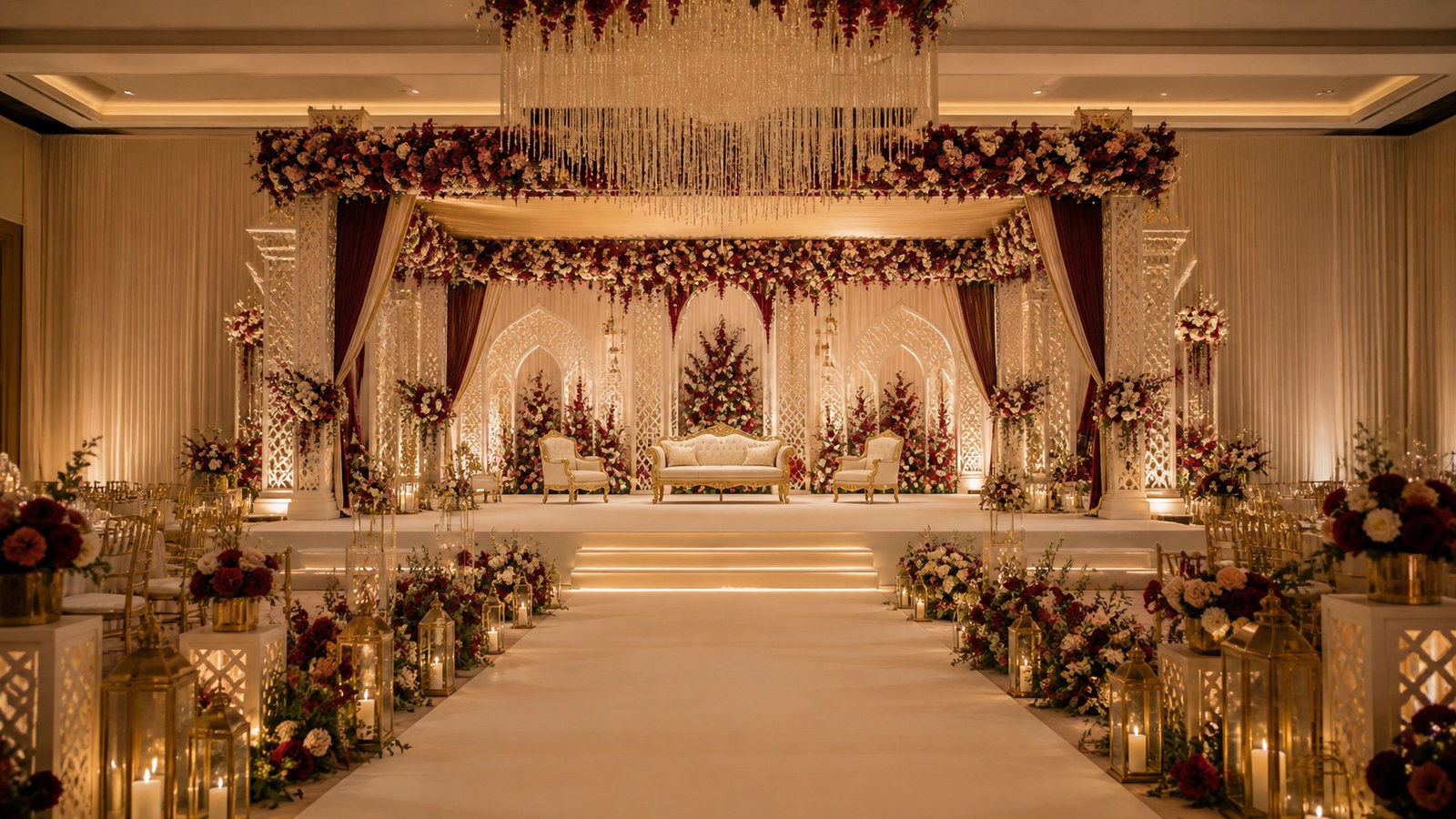
For South City II, use the design review to translate inspiration into venue-compatible instructions. The family may begin with references from social media, but the planner must decide what those images mean in terms of scale, materials, flowers, lighting, structures, labour and installation time. One page-specific design checkpoint is late-night departure and after-party transport; even if it is primarily operational, it can change how the guest-facing environment should be planned. Creative decisions should also protect sight lines for ceremonies and performances, keep circulation clear and give photography teams workable positions. A final visual approval should therefore contain more than a palette: it should identify zones, focal moments, reusable elements, items unique to each function and any contingency version required if weather or venue conditions change.
Quotation logic
Use scope visibility to protect both creativity and contingency
Budget control for South City II begins with priorities, not packages. Decide which guest or design outcomes matter most, allocate guardrails to major categories and maintain a contingency rather than committing every rupee during early inspiration. One variable to review on this page is late-night departure and after-party transport; if it affects transport, staffing, equipment or venue work, the estimate should show that connection. Written scopes are essential because wedding proposals can look comparable while covering very different responsibilities. The planner should record deposits, milestone payments, change orders and settlement dates beside the master budget so cash flow and approvals stay visible. No locality page can responsibly promise a fixed amount without the wedding facts, which is why the final commercial conversation must remain quotation-led.
Event-day operations
Give the command team one executable version of the day
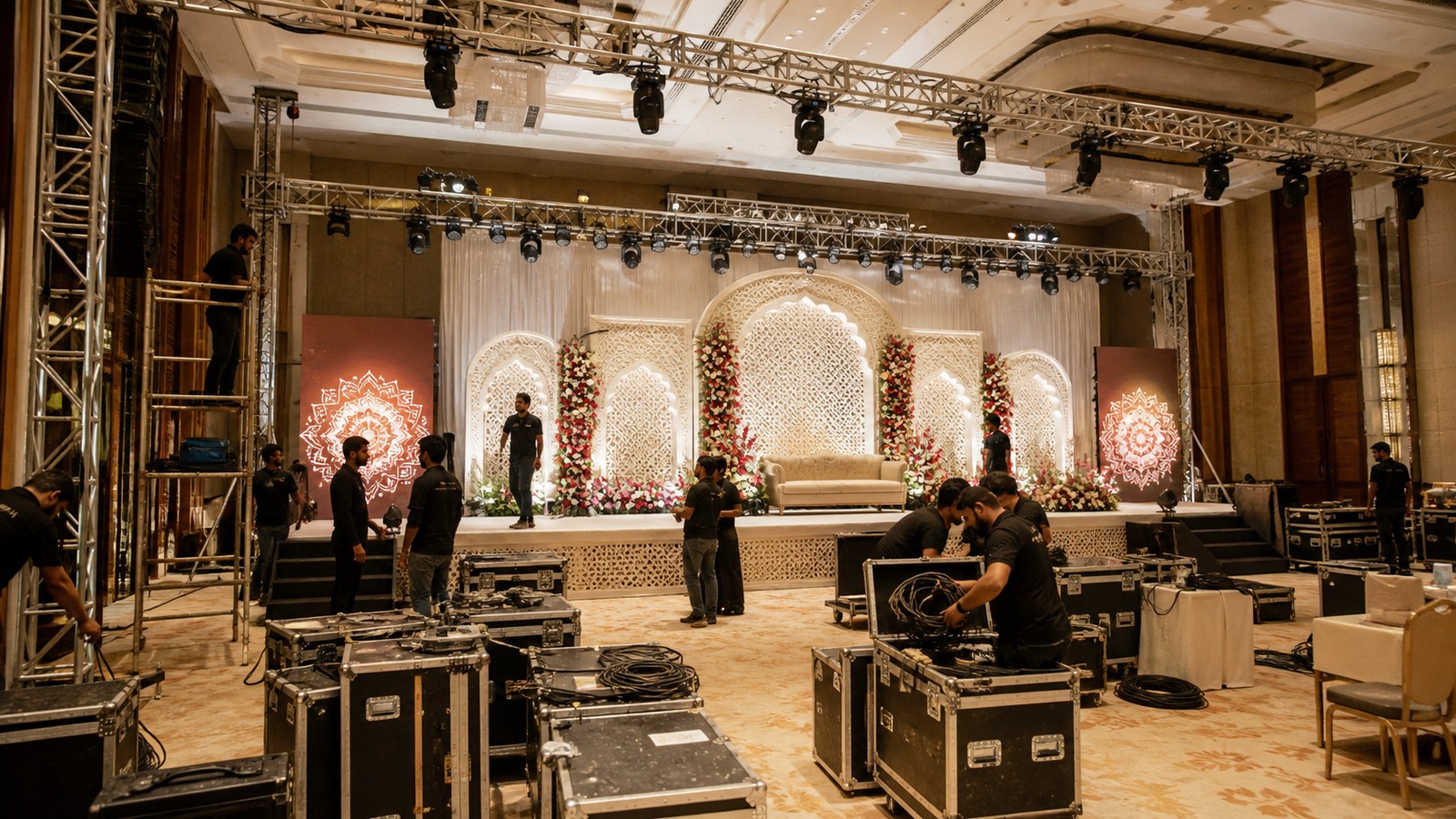
Operational planning for South City II becomes credible when someone can answer three questions at any time: what should be happening now, who owns it, and what happens if it is late or unavailable? The final file should include supplier call-times, venue access, family call-times, guest transport, ceremony or performance cues, technical checks, food service, security contacts and strike/handover responsibilities. This locality version emphasizes late-night departure and after-party transport. That focus is deliberately different from the neighboring page so the network offers more than name substitutions. The venue remains responsible for its own rules and specialist teams remain responsible for professional technical or safety approvals; the wedding planner’s task is to connect those responsibilities into a schedule that the entire event can follow.
Enquiry
Tell us what you are planning
Share the essentials first. We use a Submission ID so your WhatsApp confirmation can be matched to the form record.
- No package price is assumed before scope is understood.
- Destination requests outside Delhi, Gurugram, Noida and Faridabad are confirmed individually before scope is committed.
- After submission, WhatsApp opens so you can confirm the enquiry directly.